
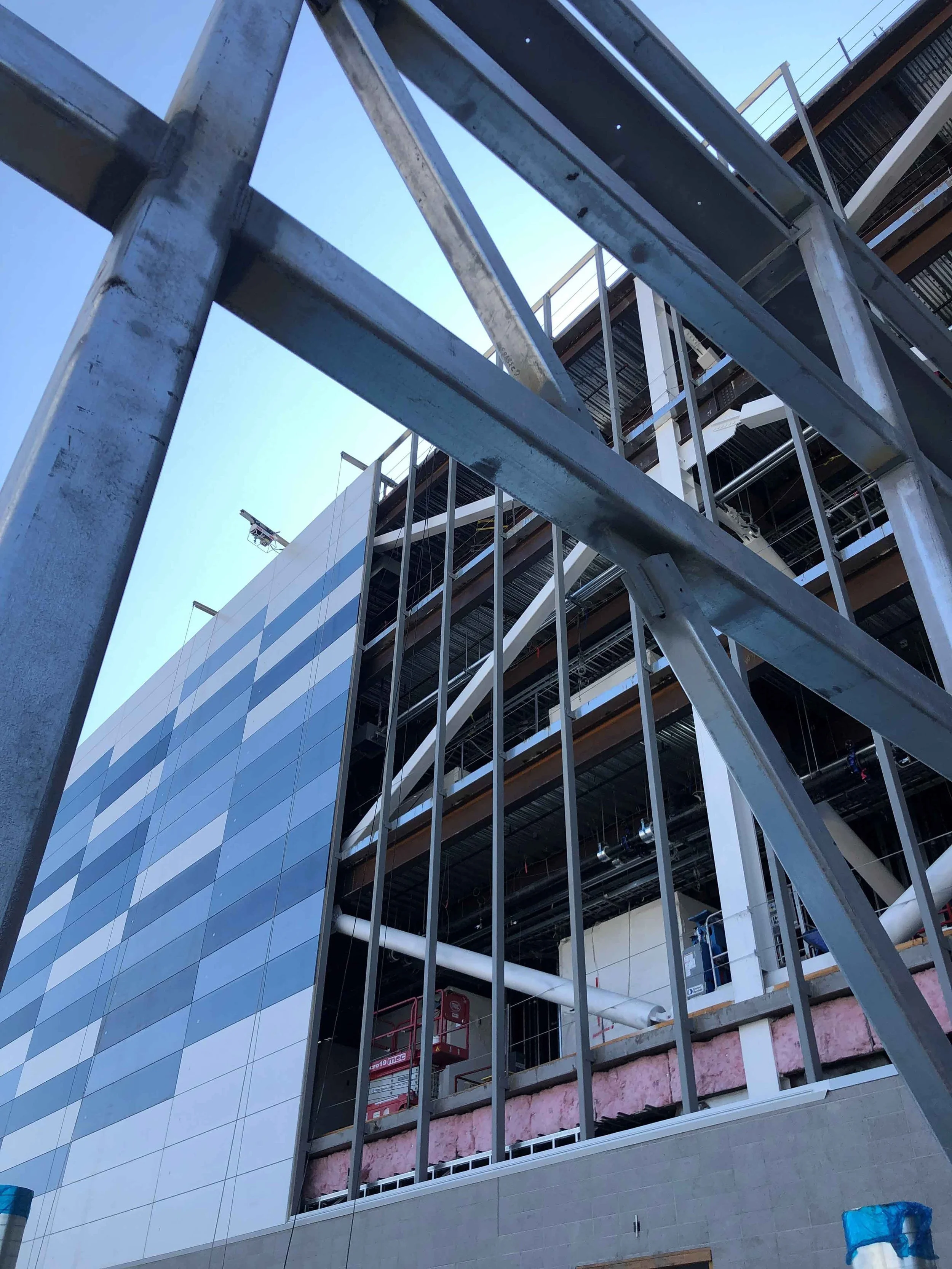

Passive Energy Dissipation
Seismic base isolation and other passive energy dissipation systems are specialized devices and technologies meant to absorb or alter energy generated during an earthquake. This represents a paradigm shift from traditional earthquake engineering, which heavily relies on dissipating energy through incurring damage in selected structural components. This damage has a direct correlation to costs incurred after an earthquake due to downtime, repairs, or total building replacement. We have worked with owners to find solutions with these proven, yet innovative technologies, for both new and existing construction.
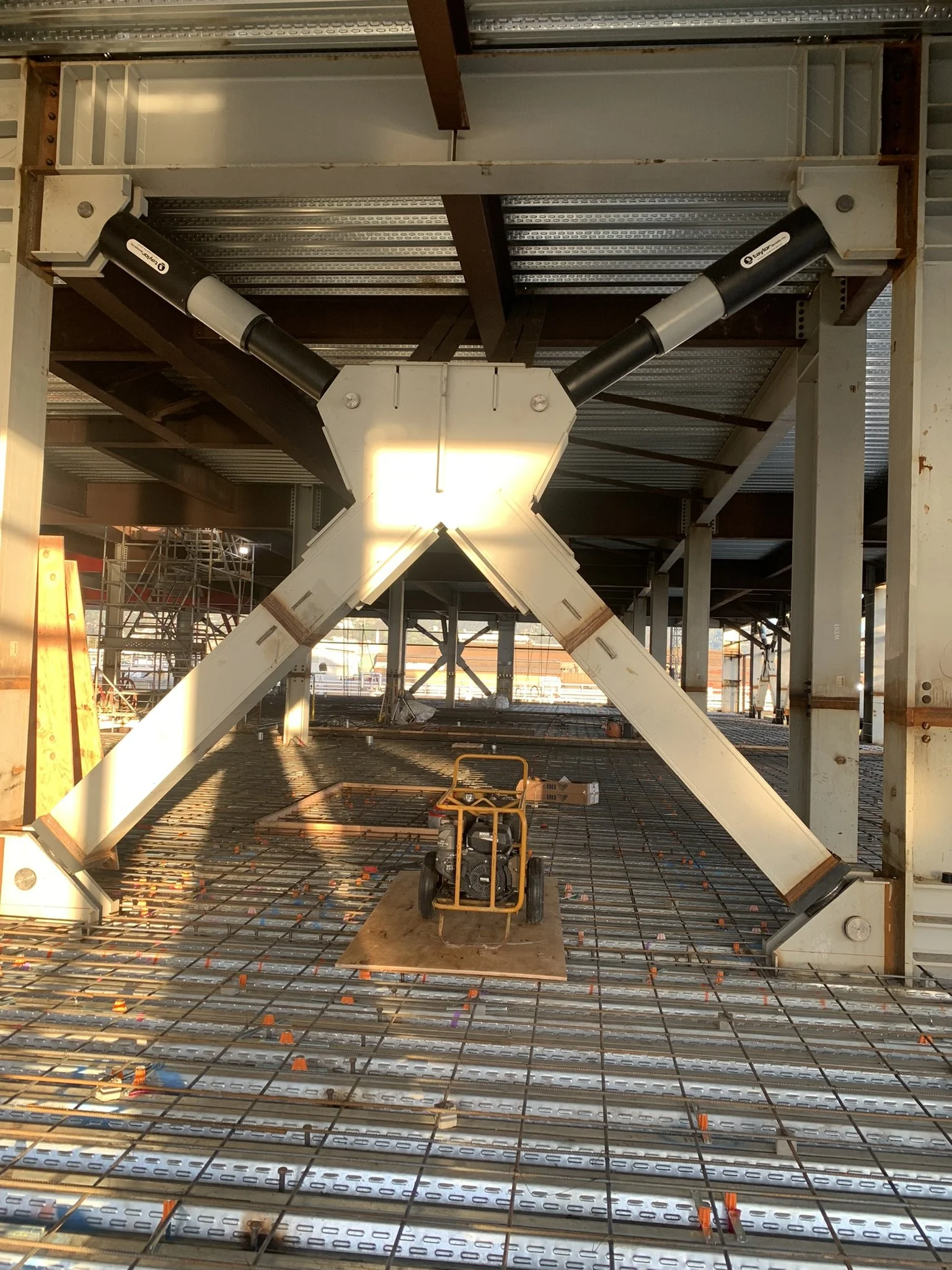
We are also experienced in Seismic Base Isolation which is a type of passive energy dissipation that works by introducing an extremely flexible device, similar to a ball bearing, typically between the building and its foundation. These devices allow the building to retain its position with little movement while the ground shakes below. The base isolation devices are typically curved sliding elements or rubber bearings reinforced with steel plates and a lead core. Seismic isolation systems can include other passive energy dissipation devices, such as fluid viscous dampers, and the base isolators can also be located at elevated floor levels. In addition to the design and implementation of the isolation system itself; we offer experience and expertise in the detailing and coordination of elements entering or surrounding the building that must accommodate the movements that occur during an earthquake.
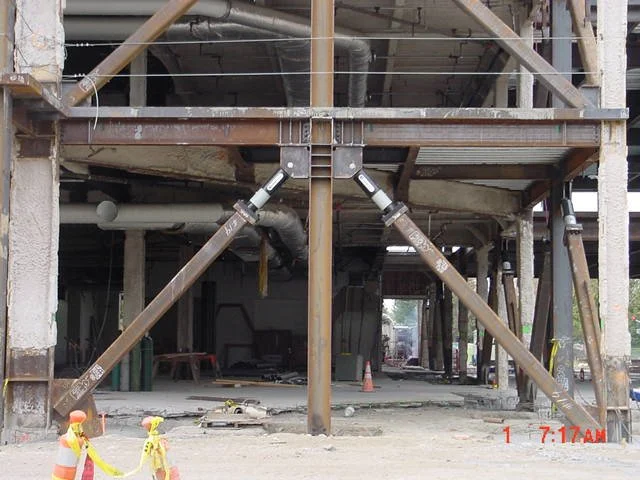
Our passive energy dissipation experience includes the use of fluid viscous dampers, which behave like shock absorbers and convert earthquake energy into heat. We have successfully implemented these devices in the retrofits of existing steel moment frame buildings (in lieu of costly strengthening/reinforcing of existing welded connections) as well as new construction where dampers are used in parallel with steel moment frames to improve the performance of the building structure.